Solution

If fuel spend is your largest variable cost, measurement has to be non-negotiable.

Tank-level visibility for theft detection and fuel control

Use ultrasonic fuel sensing to monitor actual tank behavior, detect suspicious drains or refills, and compare trip-level consumption against expected operating patterns.

Prefer messaging? Request a callback — our team responds promptly on business days.
pictor — live
What-is-Fuel-Monitoring-&-Control-Solutions
Live tracking
Alerts
Reports

Why operators choose us

Numbers that match how fleets actually run

Devices, networks, and people on the ground across India—so go-live isn’t where your project ends.

about 2%
typical calibrated accuracy
up to 90%
theft loss reduction (deployment dependent)
Real-time
alerts
Pan-India
installation

Our clients

Trusted by teams across India

PHOENIX SECURE CEAT WheelsEye Roadcast Binary Semantics MARUTI matchpointGPS Watsoo BOSCH uffizio fleettrack BLACKBUCK IMZ Intugine locoNav SPROUTWINGS eTrans GPSwale.com Safe O Buddy Vahak fleetx VAMOSYS letstrack enerjazz GTROPY TRACKOBIT Road Point GPS Infot Technologies IA AXESTRACK
Recommended product

Start with our flagship device for Fuel Monitoring & Control Solutions—full specs and deployment guidance on the product page.

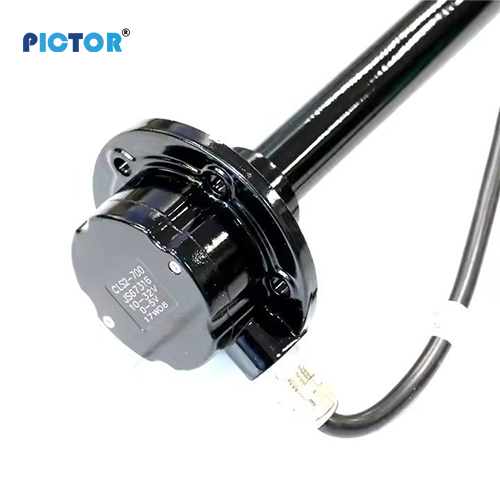
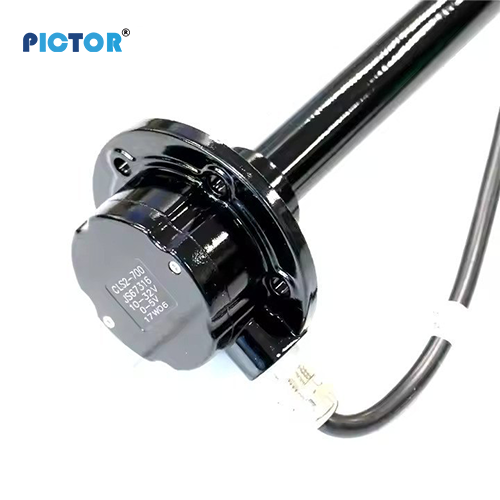
PICTOR CLS2 High Resolution Capacitance Level Sensor

PICTOR CLS2 High Resolution Capacitance Level Sensor

The PICTOR CLS2 is a high-resolution capacitance fuel level sensor designed for continuous and accurate fuel monitoring. It measures fuel levels by detecting capacitance variations as the fuel level changes. Suitable for...

The problem

Fuel loss hides in routine operations unless tank behavior is tracked continuously

  • 1 Drain events and unauthorized refills often appear as accounting variance when no sensor evidence exists.
  • 2 Manual logs and pump slips do not reliably explain route-wise overconsumption.
  • 3 Without real-time monitoring, corrective action usually happens too late to prevent repeated leakage.
Truck-Fleet-Fuel-Theft-Prevention
What-is-Fuel-Monitoring-&-Control-Solutions
The solution

Sensor-led fuel intelligence tied to your existing telematics workflow

Install ultrasonic fuel sensors and integrate them with your tracker so fuel level trends, refill events, and anomalies appear in the same command center used for fleet tracking. This makes investigation and action operational, not spreadsheet-driven.

  • Tank-level reading you can trust — Typically ±2% accuracy after calibration; level streams to your dashboard so you’re not relying on dipsticks or manual l...
  • Instant alerts on suspicious events — Drain attempts, sharp drops, or refills at odd hours trigger SMS or email—before the day’s losses are locked in.
  • Reports that match reality — Trip-wise consumption, mileage vs fuel, driver and vehicle comparisons—export when you need Excel for management.
What you get

Capabilities that hold up in daily operations

Straightforward feature notes—no jargon wall. If something here matters to your fleet, we’ll show you how it works on a call.

Tank-level reading you can trust

Typically ±2% accuracy after calibration; level streams to your dashboard so you’re not relying on dipsticks or manual logs.

Instant alerts on suspicious events

Drain attempts, sharp drops, or refills at odd hours trigger SMS or email—before the day’s losses are locked in.

Reports that match reality

Trip-wise consumption, mileage vs fuel, driver and vehicle comparisons—export when you need Excel for management.

Tamper awareness

Know if sensor or wiring is interfered with so data stays usable for investigations.

Refills tied to place

Correlate refills with location and approved fuel points so disputed bills are easier to check.

Use cases

Where teams like yours put this to work

Typical deployments—we’ll map the closest fit to your routes, vehicles, and compliance rules.

Truck-Fleet-Fuel-Theft-Prevention
01

Truck Fleet Fuel Theft Prevention

Catch drain events as they happen. Compare refills with time and place. Give transport managers a single place to investigate instead of chasing rumours.

Mining-&-Construction-Equipment
02

Mining & Construction Equipment

Monitor fuel on excavators, dumpers, and heavy kit at remote sites. Compare idle burn across machines and reduce pilferage where supervision is thin.

Transport-&-Bus-Fleets
03

Transport & Bus Fleets

Track fuel per route and per driver. Adjust schedules and refuelling habits when actual consumption drifts from the plan.

Government-&-PSU-Fleets
04

Government & PSU Fleets

Maintain audit trails for public accountability. Export reports for internal reviews and compliance checks.

See it in action

Tank trends, anomaly alerts, and route context

Analyze level changes with time and location context to identify true leakage, validate refills, and benchmark vehicle behavior.

What-is-Fuel-Monitoring-&-Control-Solutions
Industries

Where teams deploy Fuel Monitoring & Control Solutions

Explore industries we serve

ROI & outcomes

Reduce leakage and improve fuel accountability across routes

Teams use this to identify preventable losses, improve refill discipline, and align operations and finance around the same fuel dataset.

Detect suspicious drains and unauthorized refills before losses accumulate across shifts
Identify high-consumption vehicles, routes, or driver patterns using comparable trip data
Improve refill governance by matching invoice claims with tank behavior and location context
Create defensible fuel audits for finance, management, and customer accountability
Increase fleet margin by reducing preventable leakage and improving consumption discipline
How it works

From install to insight

Hardware on the vehicle, reliable connectivity, and one dashboard your team uses—end to end.

Step 1

Install & connect

Fit the device to the vehicle—wired, OBD, or battery as needed.

Step 2

Sync to the cloud

GPS and events stream securely so nothing depends on manual updates.

Step 3

Use one portal

Maps, reports, and alerts in the same login—web and mobile.

An ultrasonic sensor is installed and calibrated for each tank profile. Fuel level data is sent through the vehicle tracker to the cloud, where it is mapped against route, time, and event context. The platform flags abrupt drops, unusual refill patterns, and outlier consumption behavior. Managers can then verify events, trigger corrective action, and export reports for audit or policy reviews.

Hardware

Devices that power this solution

Browse device categories that pair with Fuel Monitoring & Control Solutions—specs and compatibility on each page.

FAQ

Questions, answered

About Fuel Monitoring & Control Solutions. View all FAQs.

Our ultrasonic sensors are typically within about ±2% once calibrated to the tank. Accuracy depends on tank shape and install quality—we help with calibration on site.
Yes. Fuel telemetry can flag suspicious drops, unauthorized refills, and consumption anomalies. Investigation quality improves when sensor data is reviewed with route, time, and stoppage context rather than as a standalone number.
Through a proper opening in the tank, by trained technicians. Most installs finish in one to two hours. We have coverage across India for commercial fleets.

We support a wide range from small tanks to 1,000+ litre commercial tanks. Irregular shapes are handled with calibration.
In many deployments, yes. Integration depends on tracker protocol support and available sensor interfaces. A compatibility check is recommended before finalizing deployment architecture.
Trip consumption, refill history, anomalies, fuel vs mileage, and driver or vehicle views. Most reports export to Excel.
Technicians profile tank geometry on site and validate against known fill volumes. Irregular tanks may need additional calibration points for stable trip-wise consumption.
Yes, when odometer or trip distance is available from GPS telemetry. Finance teams often combine fuel events, distance, and route context for defensible cost metrics.
Slope, vibration, partial fills, or sensor drift can trigger anomalies. Reviewing route, idle, and refill location context reduces false positives before disciplinary action.
Deployment depends on tank type and available sensing method. Confirm compatibility during technical discovery—ultrasonic models are most common for liquid diesel tanks.
Recalibration frequency depends on tank modifications, sensor age, and dispute rate. Many operators schedule checks during scheduled maintenance or after major body work.
Yes. Alert routing can be scoped by vehicle group, geography, or role so the right supervisor receives fuel exceptions.
Implementation readiness

Timeline, SLA, ROI Assumptions, and Integration Playbook

Use these planning anchors for internal approvals and rollout readiness before procurement.

Implementation timeline baseline

Typical flow: discovery and scope lock, pilot deployment, KPI validation window, then phased expansion. Exact timelines vary by fleet distribution and install constraints.

Support SLA assumptions

Incident priorities are triaged by business impact. Critical cases receive accelerated handling; final resolution windows depend on dependency class and on-ground access.

ROI model assumptions

ROI estimates should separate hard savings (fuel, idle, misuse) from risk savings (incident/dispute reduction). Baseline and review periods must be agreed before rollout.

Integration playbook

Integration plans are scoped by data exchange method, event triggers, and reporting ownership. API/webhook requirements are validated during technical discovery.

Solution content standards

Written by

Pictor Telematics Solutions Editorial Team · Fleet Telematics Product Guidance

Reviewed by

Mr. Rajesh Kumar · Founder Director & Chief Executive Officer

Published

Jan 15, 2024

Last reviewed

Apr 10, 2026

Validation approach

Solution pages are reviewed against hardware capabilities, rollout workflows, and KPI assumptions from commercial deployments since 2014.

Next step

Ready to see Fuel Monitoring & Control Solutions on your fleet?

Book a demo tailored to your vehicles, regions, and integrations. Our specialists respond fast—usually as quickly as possible on business days.