
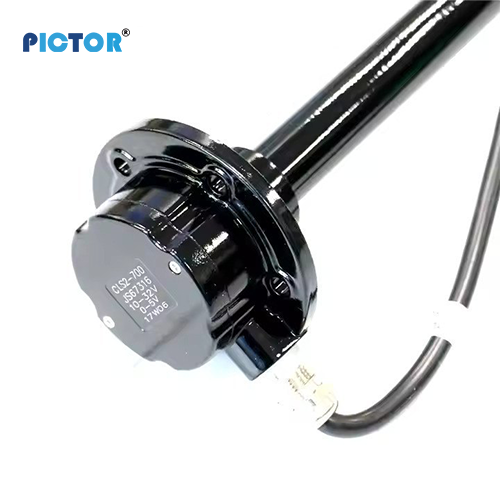
CLS2 Analog Ultrasonic Fuel Level Sensor for Fleet
The PICTOR CLS2 is a high-resolution capacitance fuel level sensor designed for continuous and accurate fuel monitoring. It measures fuel levels by detecting capacitance variations as the fuel level changes. Suitable for diesel, gasoline, and kerosen...
About CLS2 Analog Ultrasonic Fuel Level Sensor for Fleet
The PICTOR CLS2 capacitance level sensor continuously detects fuel levels using advanced capacitance measurement technology. It can be shortened to fit different tank depths and supports external calibration for precise configuration. Designed with an SAE 5-bolt flange mount and IP65 protection rating, it ensures durability and reliability in harsh environments. The sensor supports 0–5V, RS232, and RS485 outputs for seamless integration with GPS trackers and monitoring systems.
- High-resolution measurement with ≤1mm accuracy
- Continuous real-time fuel level monitoring
- Adjustable probe length for different tank sizes
- Multiple output interfaces (Analog and Digital)
- External calibration support
Key highlights
Product features
Evaluate these capabilities against your route profile, risk controls, and team workflows.
- High-resolution measurement with ≤1mm accuracy
- Continuous real-time fuel level monitoring
- Adjustable probe length for different tank sizes
- Multiple output interfaces (Analog and Digital)
- External calibration support
- IP65-rated industrial protection
- Easy installation with SAE 5-bolt flange
- Suitable for integration with telematics systems
Technical specifications
Use this table for compatibility checks, deployment planning, and integration review.
| detection_type | Capacitance-based fuel level detection |
|---|---|
| fuel_compatibility | Diesel, Gasoline, Kerosene |
| supply_voltage | 10–32V DC, 5V |
| output_signal | 0–5V, RS232, RS485 |
| resolution | ≤ 1mm |
| operating_temperature | -40°C to +85°C |
| protection_rating | IP65 |
| mounting_type | SAE 5-bolt flange mount |
| wire_length_mm | 600 |
| customization | Probe length can be customized according to tank depth |
| model_variants | {"part_number":"JS67315","model":"CLS2-600","length_mm":600}, {"part_number":"JS67316","model":"CLS2-700","length_mm":700}, {"part_number":"JS67319","model":"CLS2-1000","length_mm":1000} |
| resolution_mm | ≤1 |
| voltage_range | 10–32V DC or 5V |
| output_options | 0–5V, RS232, RS485 |
| protection_class | IP65 |
| operating_temperature_celsius - min | -40 |
| operating_temperature_celsius - max | 85 |
| mounting_standard | SAE 5-hole flange |
| accessories_included | 5 × M5 screws, 2mm thick NBR gasket |
| optional_accessories | 2mm thick FPM gasket (recommended for gas tank installation) |
| calibration | External calibrator supported |
Key features
- High-resolution measurement with ≤1mm accuracy
- Continuous real-time fuel level monitoring
- Adjustable probe length for different tank sizes
- Multiple output interfaces (Analog and Digital)
- External calibration support
- IP65-rated industrial protection
- Easy installation with SAE 5-bolt flange
- Suitable for integration with telematics systems
Frequently asked questions
Ready to upgrade your fleet safety?
Get a scoped quote, schedule a demo, and validate rollout fit with our product team.
Request demoRelated products
More models you may want to compare.
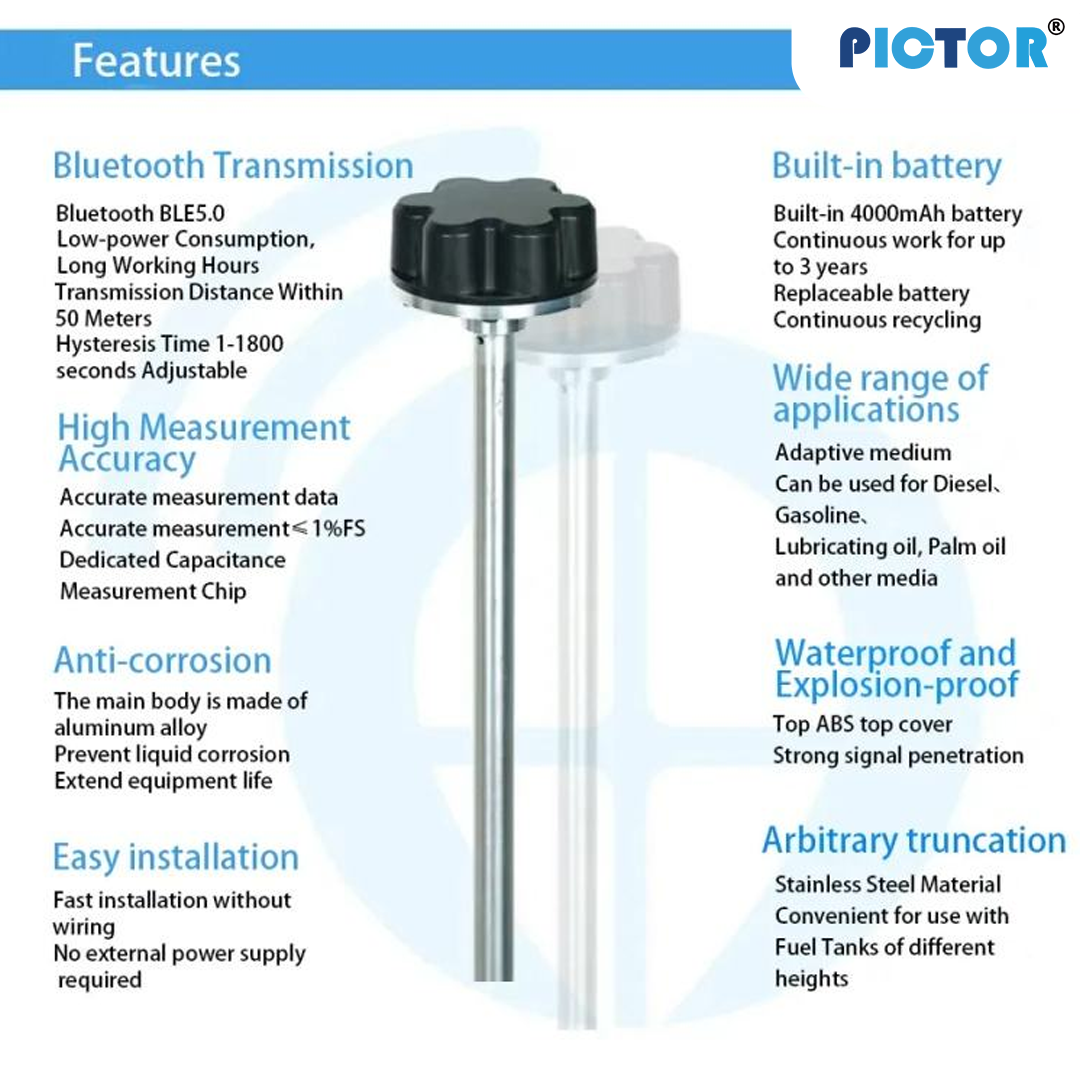
CLS2 BLE Bluetooth Fuel Level Sensor for GPS Tracker
Pictor CLS2 BLE is a high-precision wireless capacitive fuel level sensor designed for accurate fuel monitoring without external wiring. It...
View product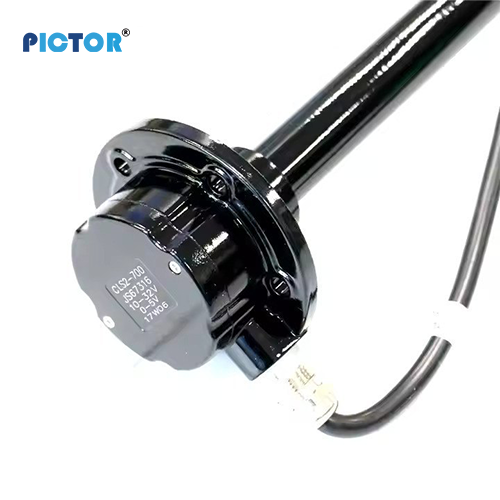
CLS2 RS485 Ultrasonic Fuel Level Sensor for Fleet Monitoring
The CLS2 High Resolution Capacitance Level Sensor is a precision fuel monitoring device designed for continuous fuel level detection in dies...
View productWritten by
Pictor Telematics Product Documentation Team · Specifications and Deployment Guidance
Reviewed by
Mr. Rajesh Kumar · Founder Director & Chief Executive Officer
Published
Jan 15, 2024
Last reviewed
Apr 10, 2026
Validation approach
Product information is reviewed against technical specifications, installation constraints, and operational usage patterns from deployments since 2014.