
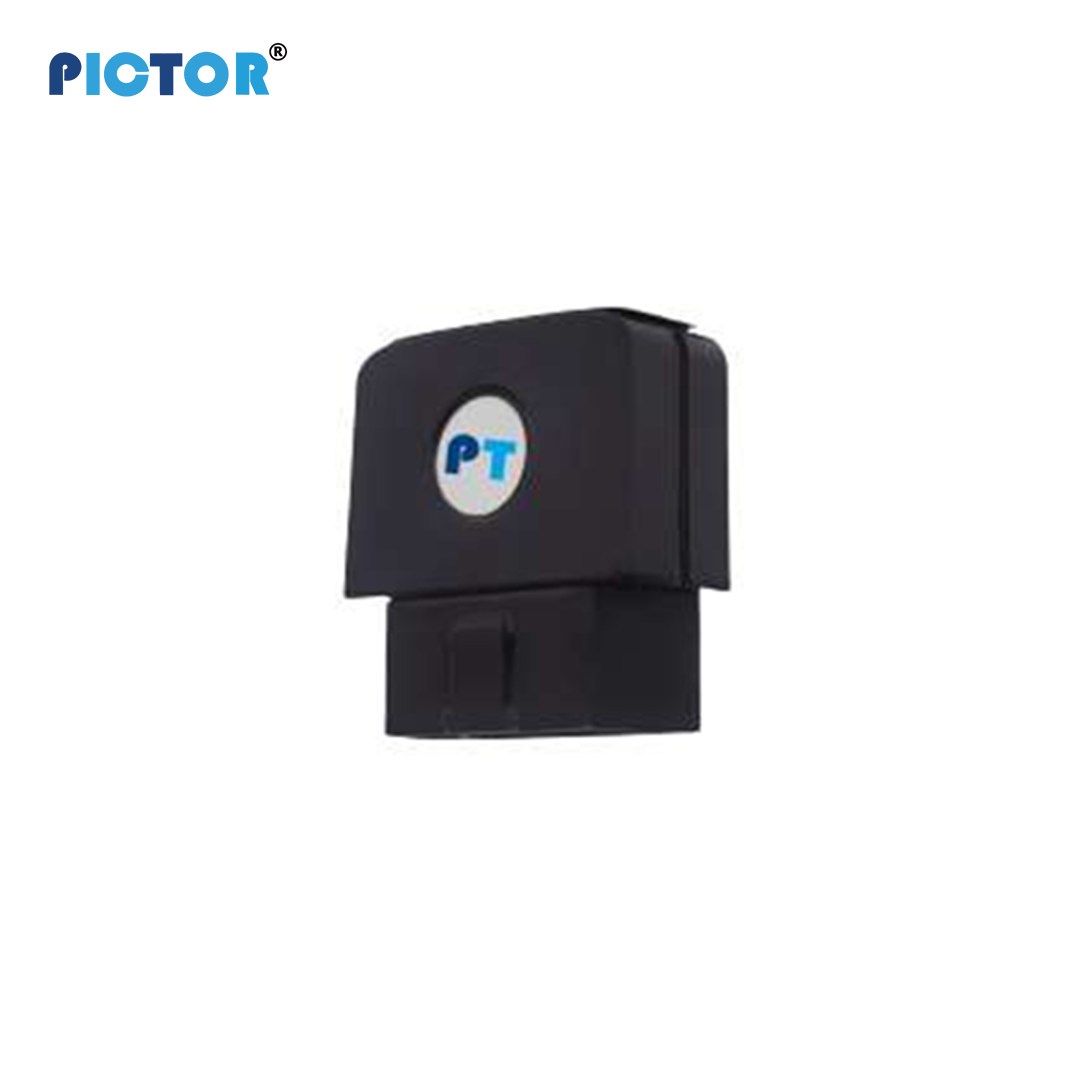
PS21-A OBD2 4G GPS Tracker Advanced for Fleet Diagnostics
Pictor PS21A is a compact OBD-based GPS Tracker designed for real-time vehicle tracking, fleet monitoring, and security management. It supports GPS + LBS positioning, ACC detection, geo-fencing, over-speed alerts, and remote monitoring via web and mo...
About PS21-A OBD2 4G GPS Tracker Advanced for Fleet Diagnostics
The Pictor PS21A GPS Tracker is an advanced OBD vehicle tracking device engineered for precise location tracking and intelligent fleet management. With built-in GSM and GPS modules, it enables real-time tracking, geo-fencing, overspeed alarms, ACC detection, vibration alerts, and historical route playback. The device supports vehicle battery power supply and includes a built-in backup battery for uninterrupted tracking. Designed for easy installation via OBD interface, it is suitable for most vehicle models and operates reliably within a wide temperature range.
- Real-time GPS tracking
- ACC detection
- Geo-fence alarm
- Low battery alert
- SMS support
Key highlights
Product features
Evaluate these capabilities against your route profile, risk controls, and team workflows.
- Real-time GPS tracking
- ACC detection
- Geo-fence alarm
- Low battery alert
- SMS support
- Trace playback (route history)
- Disassembly alarm
- Over-speed alarm
- Vibration alarm
- Remote platform monitoring
- OBD plug-and-play installation
Technical specifications
Use this table for compatibility checks, deployment planning, and integration review.
| Power Supply | Vehicle Battery (OBD Port) |
|---|---|
| Working Voltage | DC 9V - 36V |
| Built-in Battery | 80mAh (3.7V Polymer Battery) |
| Working Temperature | -20°C to 70°C |
| Locate Mode | GPS + LBS |
| Size | 47mm × 43mm × 20mm |
| Location Accuracy | Affected by environmental factors such as geography and signal strength |
| Network | GSM |
| Positioning System | GPS + LBS |
| LED Indicators - Yellow (GSM Light) - Fast Blinking | GSM Initialization |
| LED Indicators - Yellow (GSM Light) - Slow Blinking | GSM Works Normally |
| LED Indicators - Yellow (GSM Light) - No Light | GSM in Sleep Mode |
| LED Indicators - Blue (GPS Light) - Fast Blinking | Searching for GPS Signal |
| LED Indicators - Blue (GPS Light) - Slow Blinking | GPS Works Normally |
| LED Indicators - Blue (GPS Light) - No Light | GPS in Sleep Mode |
| Interface Pins - CAN_H | Pin 6 |
| Interface Pins - CAN_L | Pin 14 |
| Interface Pins - K_BUS | Pin 7 |
| Interface Pins - GND | Pin 4 & 5 |
| Interface Pins - B+ | Pin 16 |
| Server Platform | WanWayTrack |
| APN Setting Required | Yes (Carrier-based APN configuration) |
Key features
- Real-time GPS tracking
- ACC detection
- Geo-fence alarm
- Low battery alert
- SMS support
- Trace playback (route history)
- Disassembly alarm
- Over-speed alarm
- Vibration alarm
- Remote platform monitoring
- OBD plug-and-play installation
Downloads & documentation
Frequently asked questions
Ready to upgrade your fleet safety?
Get a scoped quote, schedule a demo, and validate rollout fit with our product team.
Request demoRelated products
More models you may want to compare.

PS21 OBD2 4G GPS Tracker for Car Fleet Vehicle Diagnostics
PS21 is a compact OBD2 plug-and-play GPS tracker designed for real-time vehicle tracking, diagnostics, and fleet monitoring. Equipped with G...
View product
PS22 OBD2 4G GPS Tracker for Fleet Vehicle Monitoring
The PS22 is a compact 4G OBD-II GPS vehicle tracker designed for real-time vehicle tracking, diagnostics, and fleet monitoring. With built-i...
View product
PS25 OBD2 4G GPS Fleet Tracker with Advanced Diagnostics
The PS25 OBD Car GPS Tracker is a plug-and-play vehicle tracking device that connects directly to the vehicle’s OBD-II port for real-time lo...
View productWritten by
Pictor Telematics Product Documentation Team · Specifications and Deployment Guidance
Reviewed by
Mr. Rajesh Kumar · Founder Director & Chief Executive Officer
Published
Jan 15, 2024
Last reviewed
Apr 10, 2026
Validation approach
Product information is reviewed against technical specifications, installation constraints, and operational usage patterns from deployments since 2014.