
How to use this page for evaluation
- Confirm whether your operating pattern matches this scenario.
- Map the workflow changes needed for dispatch, safety, and reporting teams.
- Review related solutions and compare deployment models before purchase.
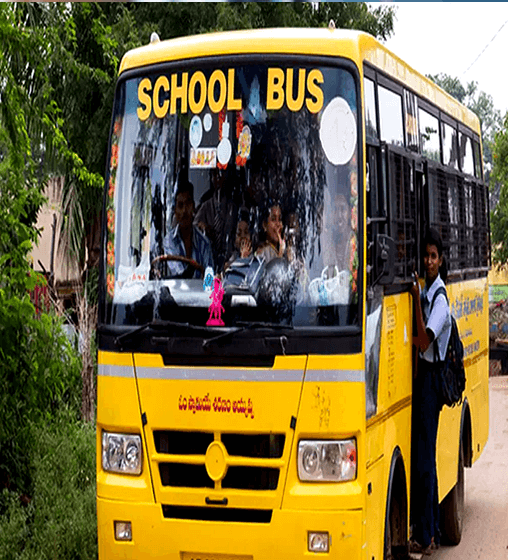
Industry Background: School Transport is a Safety Responsibility
School transportation in India carries a high duty of care. Every day, students travel through unpredictable traffic and varying road conditions across urban and semi-urban routes. Parents expect safety, punctuality, and transparency. For schools, transport operations directly affect trust, reputation, and compliance outcomes. Manual supervision alone is no longer sufficient for this responsibility.
Rising Parent Expectations
Parents increasingly expect visibility into bus movement and assurance that children are safe during pickup and drop operations.
Need for Real-Time Operations Control
Schools require live route tracking, driver behavior oversight, and incident evidence to manage risk at scale.
The Problem: Safety and Visibility Gaps in Daily Operations
A mid-sized private school operating 25 buses faced growing concern from parents and management. There was limited visibility inside buses, inconsistent route discipline, and no reliable way to track unsafe driving behavior in real time. Parent calls increased during delays, and incident handling was difficult due to missing evidence.
No Visibility Inside the Bus
School administrators and parents had no dependable way to verify in-bus safety behavior or staff conduct during transit.
Unsafe Driving Patterns
Instances of overspeeding, harsh braking, and phone use created avoidable risk for students.
No Real-Time Tracking for Parents
Without live tracking, parent communication depended on manual calls, resulting in confusion and stress.
Route Delays and Unplanned Stops
Occasional route deviations and unnecessary stoppages affected punctuality and trust.
No Evidence for Incidents and Complaints
Disputes involving student behavior, complaints, or minor incidents lacked objective proof for fair resolution.
The Solution: Smart Dashcam + GPS Bus Monitoring
The school deployed a connected safety system using H20P-C cabin AI dashcams, T98 (1+2) dashcams, and GPS tracking across the fleet. The deployment created a structured, real-time control layer for safety monitoring, route visibility, and incident response.
Cabin and Road Camera Coverage
Each bus was equipped with interior and front-facing coverage to monitor student environment and road context continuously.
Driver Monitoring Alerts
AI configuration detected fatigue, distraction, and phone usage, with immediate in-bus alerts to improve behavior on the spot.
Live GPS Tracking and Route Monitoring
Every bus transmitted live location, trip progression, and route adherence for school teams and parent updates.
Unsafe Event Alerts
Overspeeding, harsh braking, and unsafe driving events were flagged instantly for timely intervention.
Central Dashboard Control
Management could monitor all buses, routes, and alerts from one dashboard with clear operational status.
Operational Impact After Deployment
Within months, the school observed measurable improvement in safety behavior, communication quality, and transport reliability. The system shifted operations from reactive follow-up to proactive monitoring and faster response.
Complete Transport Transparency
Live and recorded video improved oversight of in-bus conditions and incident context.
Improved Driver Discipline
Driver behavior became safer and more consistent under continuous monitoring and alerting.
Higher Parent Confidence
Real-time bus tracking reduced uncertainty and improved trust in school transport operations.
Better Route and Time Control
Schools could identify delays, enforce route discipline, and optimize pickup/drop schedules.
Faster Emergency Response
Location and event visibility helped teams respond quickly to accidents, health issues, and urgent incidents.
Fair and Faster Complaint Resolution
Video evidence supported objective review, reduced disputes, and improved stakeholder confidence.
Measurable Results and Stakeholder Value
The school reported fewer unsafe driving events, lower parent complaint volume, reduced delay frequency, and stronger transport safety perception. Parents gained peace of mind, students benefited from safer travel, management improved control, and drivers worked with clearer accountability standards.
Why This Approach Works for Indian Schools
School transport in India demands practical systems that combine visibility, monitoring, and control. Dashcam coverage acts as continuous observation, GPS provides route intelligence, and alerting enables immediate corrective action. This integrated model helps schools protect students while strengthening brand trust.
Recommended Setup by Fleet Type
For smaller buses, deploy H20P-C cabin monitoring. For medium and large buses, deploy T98 (1+2) multi-view configuration. Use GPS tracking across all buses and standardize SOPs for alert triage, escalation, and parent communication.
Final Takeaway
School transportation cannot rely only on rules and manual supervision. Real-time monitoring, live tracking, and instant alerts are now essential to protect students, support parents, and maintain a safe and trusted school transport system.
GPS Tracking for School Bus
Explore tailored solutions for your sector. View School Bus industry solutions
Explore Related Solutions
Frequently Asked Questions
Want to Validate This Use Case on Your Fleet?
Share your vehicle count, operating geography, and KPI target so we can recommend an implementation path grounded in your operational reality.